Partnered with a founding team to design the initial platform that secured match funding from the Irish secondary school system — a career and educational guidance tool built for students, parents, and school counselors, grounded in psychometric research and designed to give every student a clear path forward.
The Irish Leaving Certificate — the national exam that determines university placement — forces students to commit to subject choices and career directions as young as 15 or 16. Most make these decisions with limited self-knowledge, limited career awareness, and guidance counselors stretched across hundreds of students with inadequate tools to support them.
The result: students choosing pathways based on parental expectation, peer pressure, or familiarity rather than genuine alignment with their strengths, interests, and passions. Misalignment at this stage has compounding consequences — wrong university programs, disengaged students, career pivots that cost years.
Build a platform that combines psychometrically validated assessment, personalized pathway planning, and a collaboration layer connecting students, parents, and counselors — compelling enough to secure match funding from the Irish secondary school system and deploy in real schools.
I joined as a co-founding design partner — brought in by the founding team to lead the design from zero. The initial platform needed to be investor-ready and school-ready simultaneously: rigorous enough to earn trust from educators and institutions, intuitive enough for a 16-year-old to navigate independently.
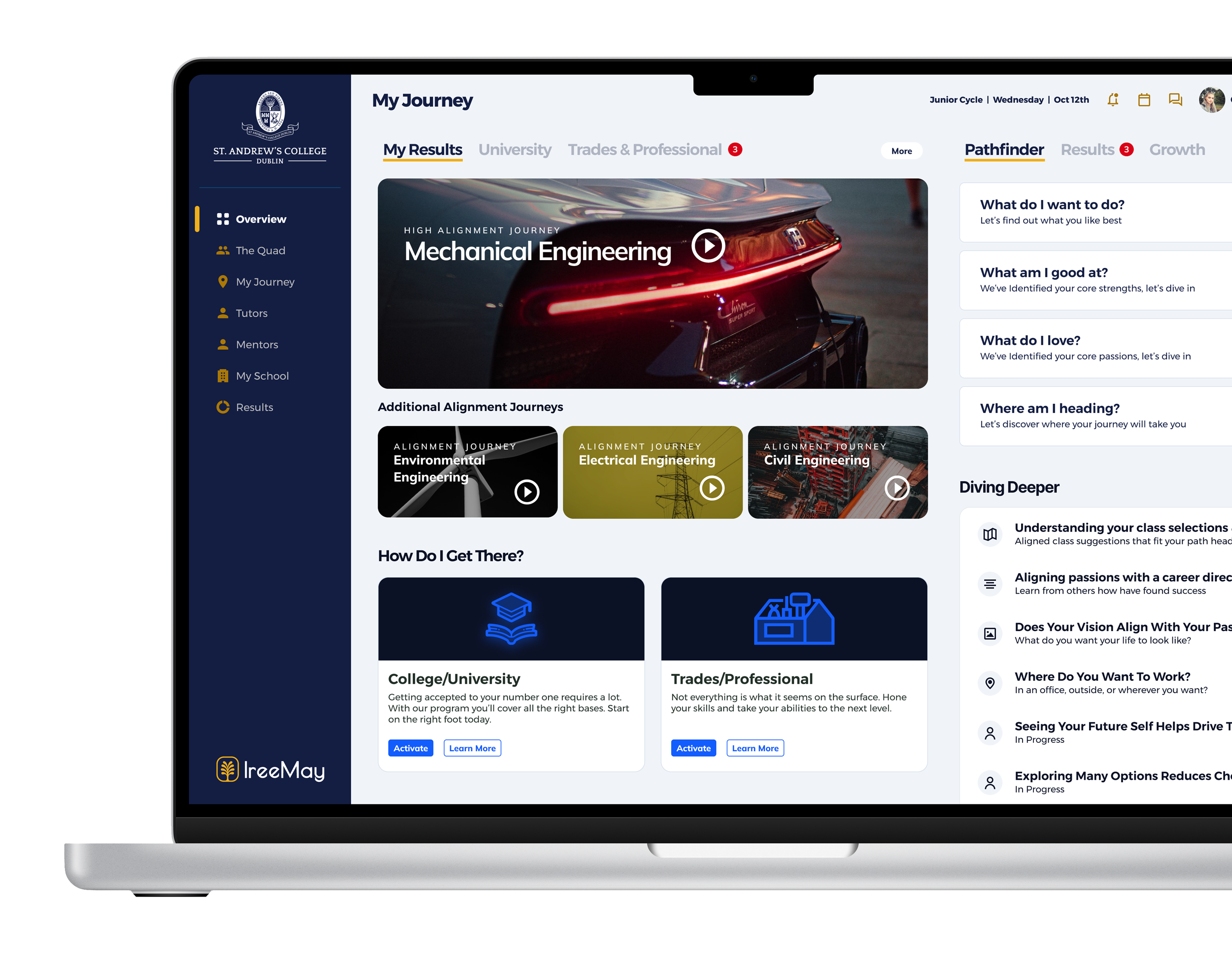
The design work was the primary vehicle for securing match funding from the Irish secondary school system. This wasn't a pitch deck — it was a working platform demonstrating real product thinking, real user flows, and real value for the three stakeholders who had to sign off: students, parents, and school guidance counselors.
Match funding in the Irish education context means the Department of Education or school system co-invests alongside private investors when a product demonstrates genuine educational merit and adoption readiness. The platform had to prove it could integrate into existing school workflows, meet the needs of counselors managing hundreds of students, and produce outcomes students and parents could act on.
The design made that case. The €1.93M followed.
IreeMay's core design challenge was building a coherent experience across three fundamentally different user types with different levels of digital comfort, different motivations, and different definitions of success. A 16-year-old student, their parents, and a guidance counselor managing 300 students don't want the same thing from a platform — but they're all working toward the same outcome.
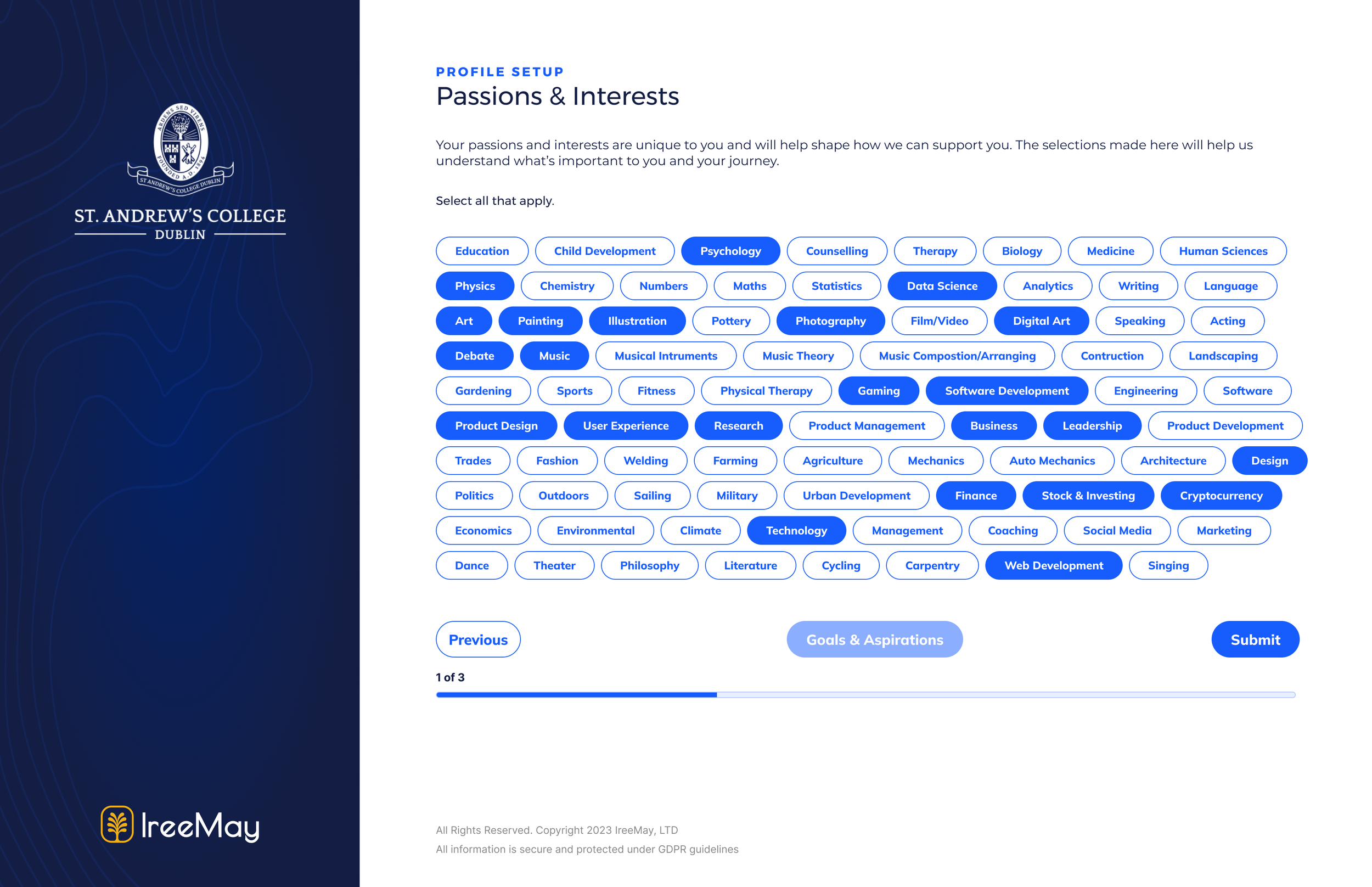
The student persona was the design north star for every decision. Tommy isn't disengaged — he's overwhelmed. He has multiple genuine interests and no framework for turning them into a direction. The platform needed to feel like a guide, not a test — and needed to produce an outcome he could show his parents and counselor and say "this is me, this is where I'm going."
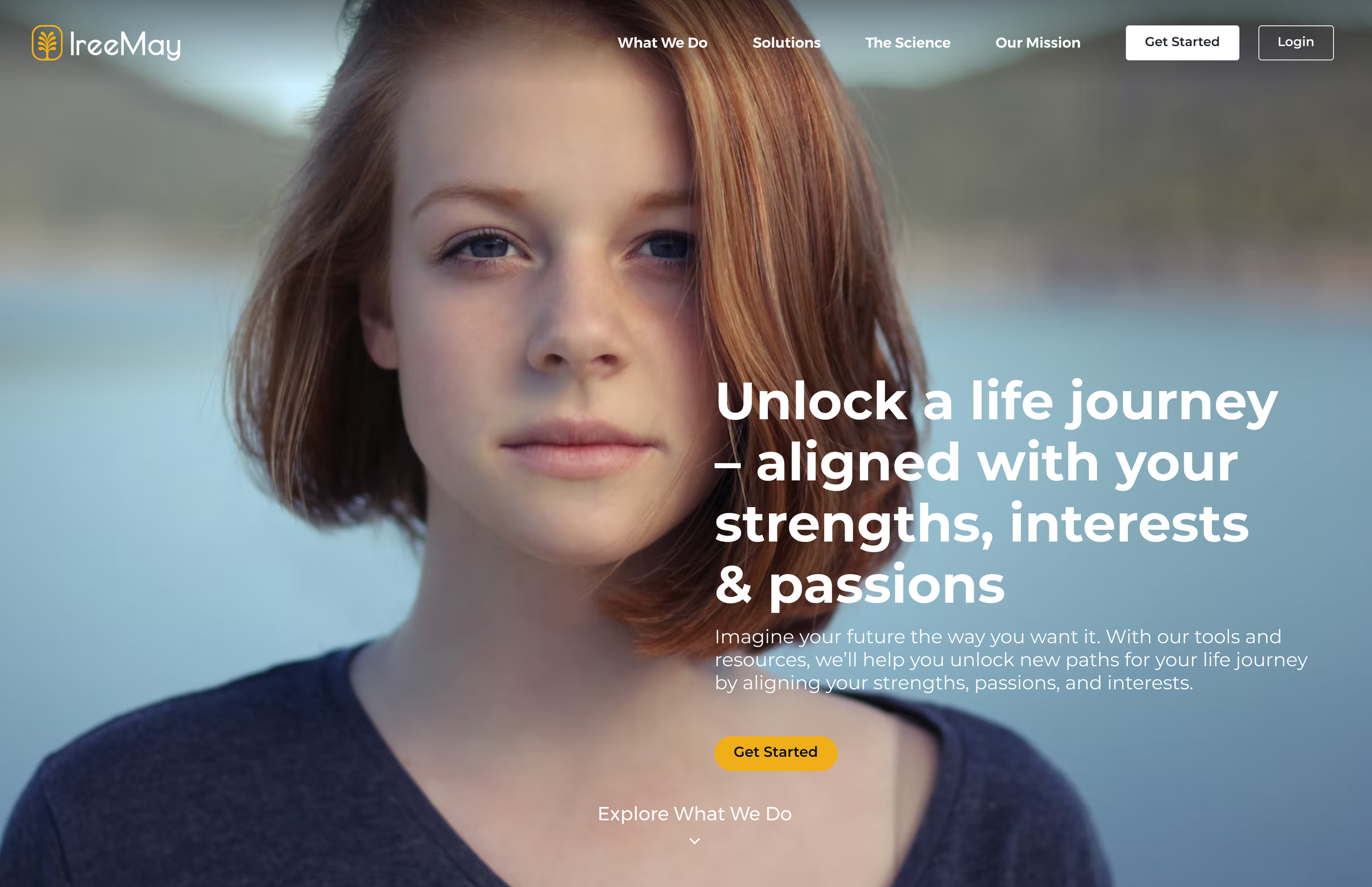
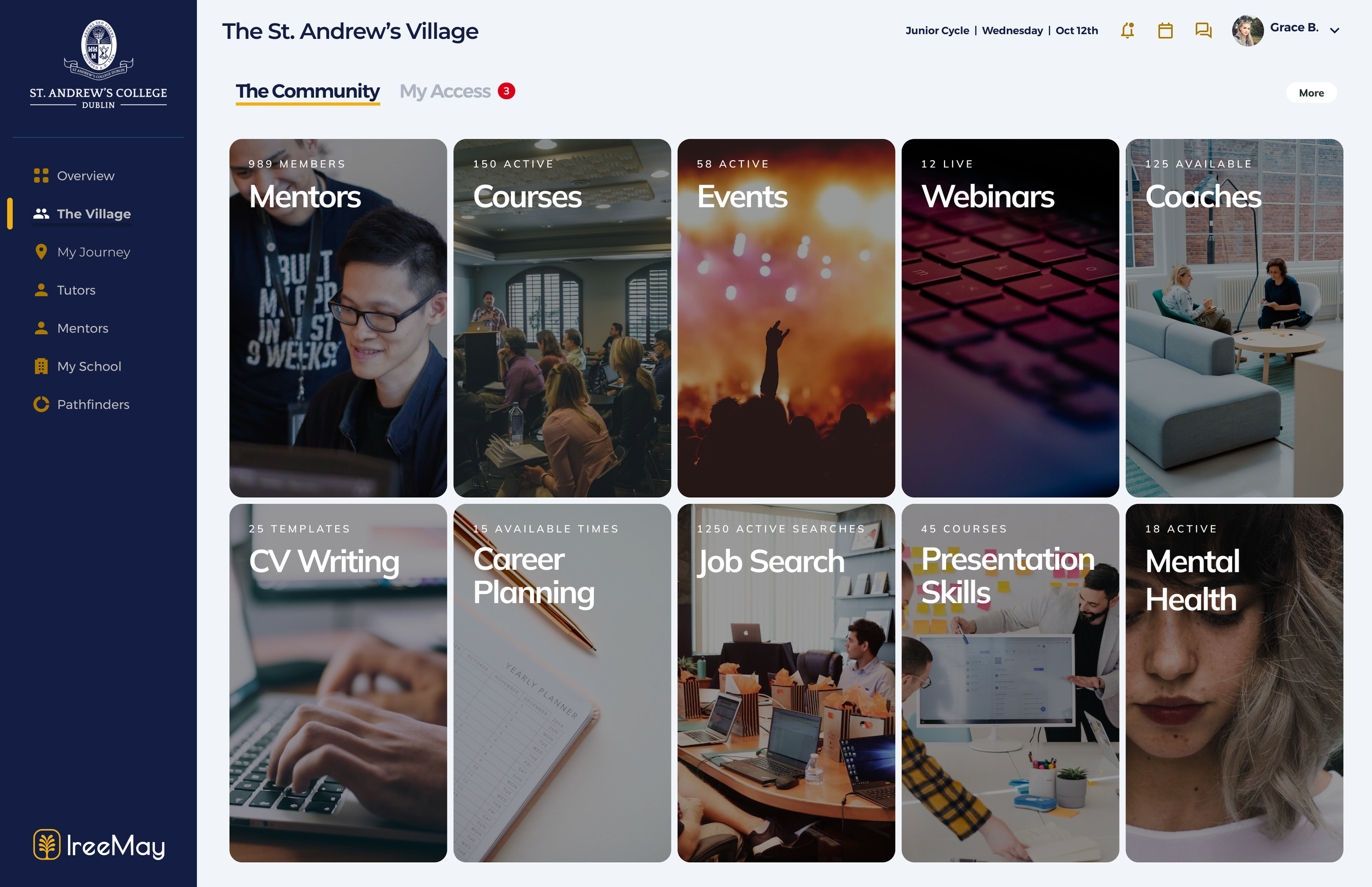
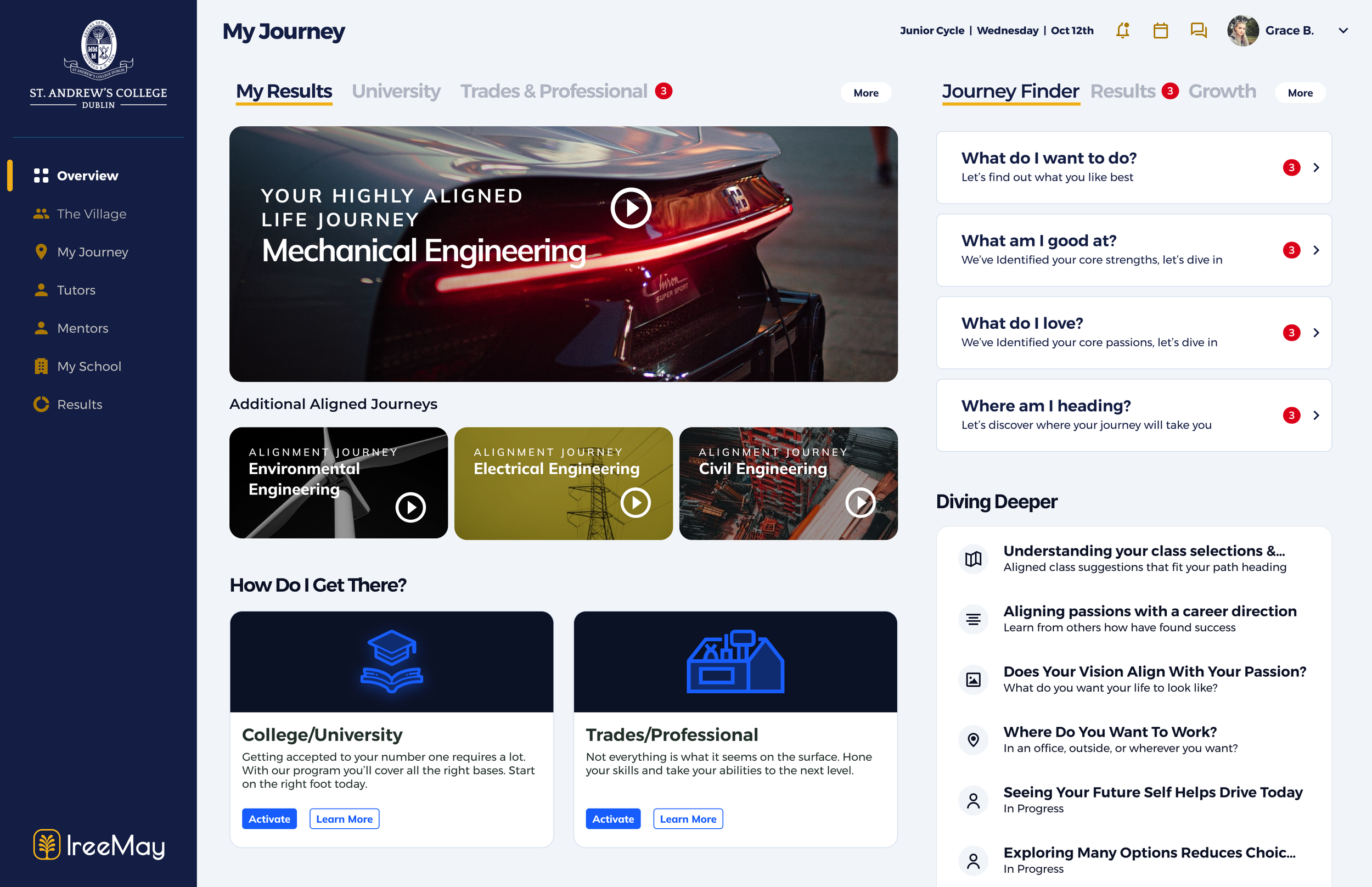
The homepage had to do two jobs simultaneously: speak to students in a way that felt personal, optimistic, and accessible, while communicating credibility to the schools, counselors, and investors who would be evaluating the platform as an institutional tool. The visual language was warm and forward-looking — anchored in a genuine Irish educational context, not generic global EdTech aesthetic.
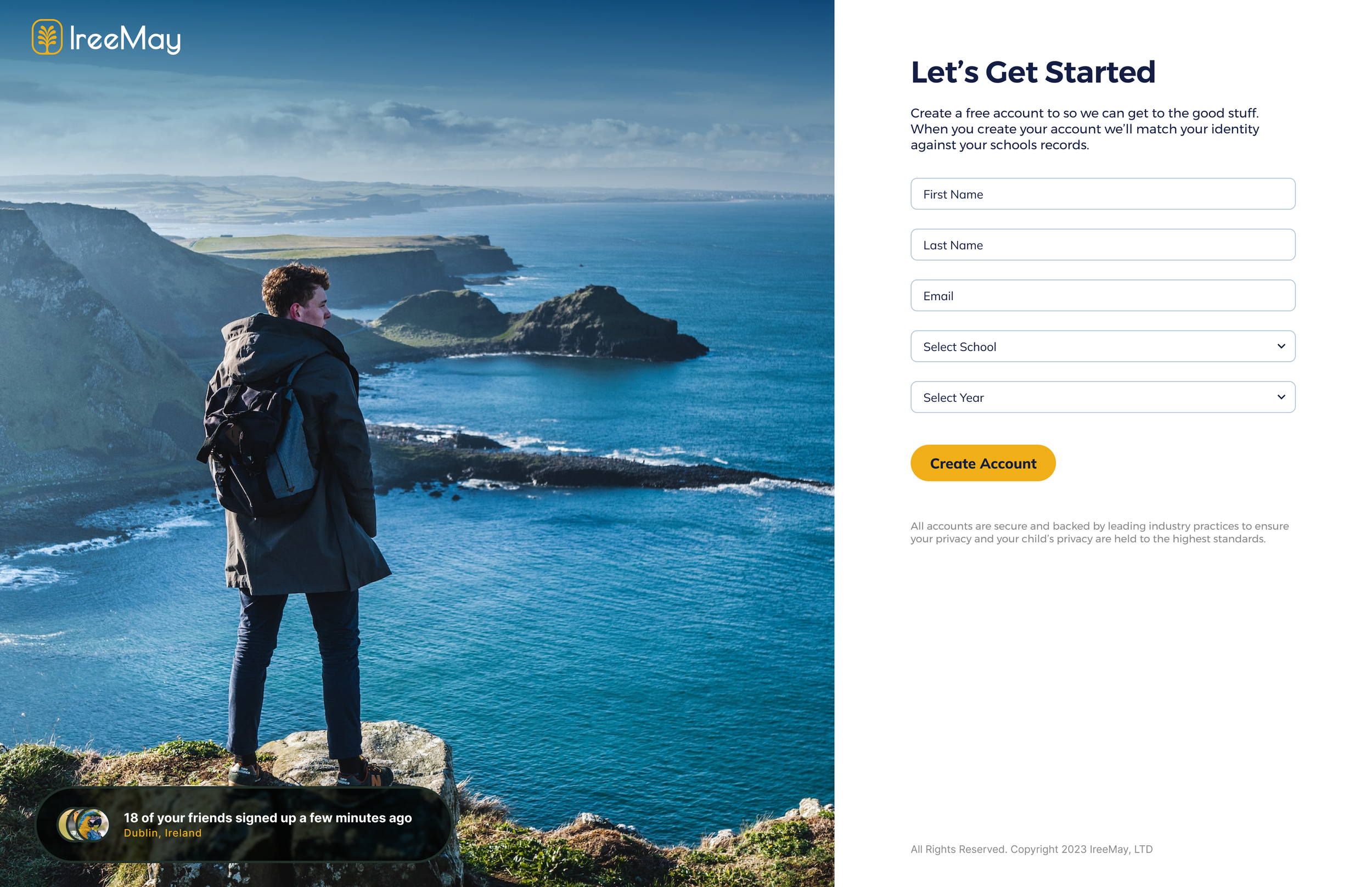
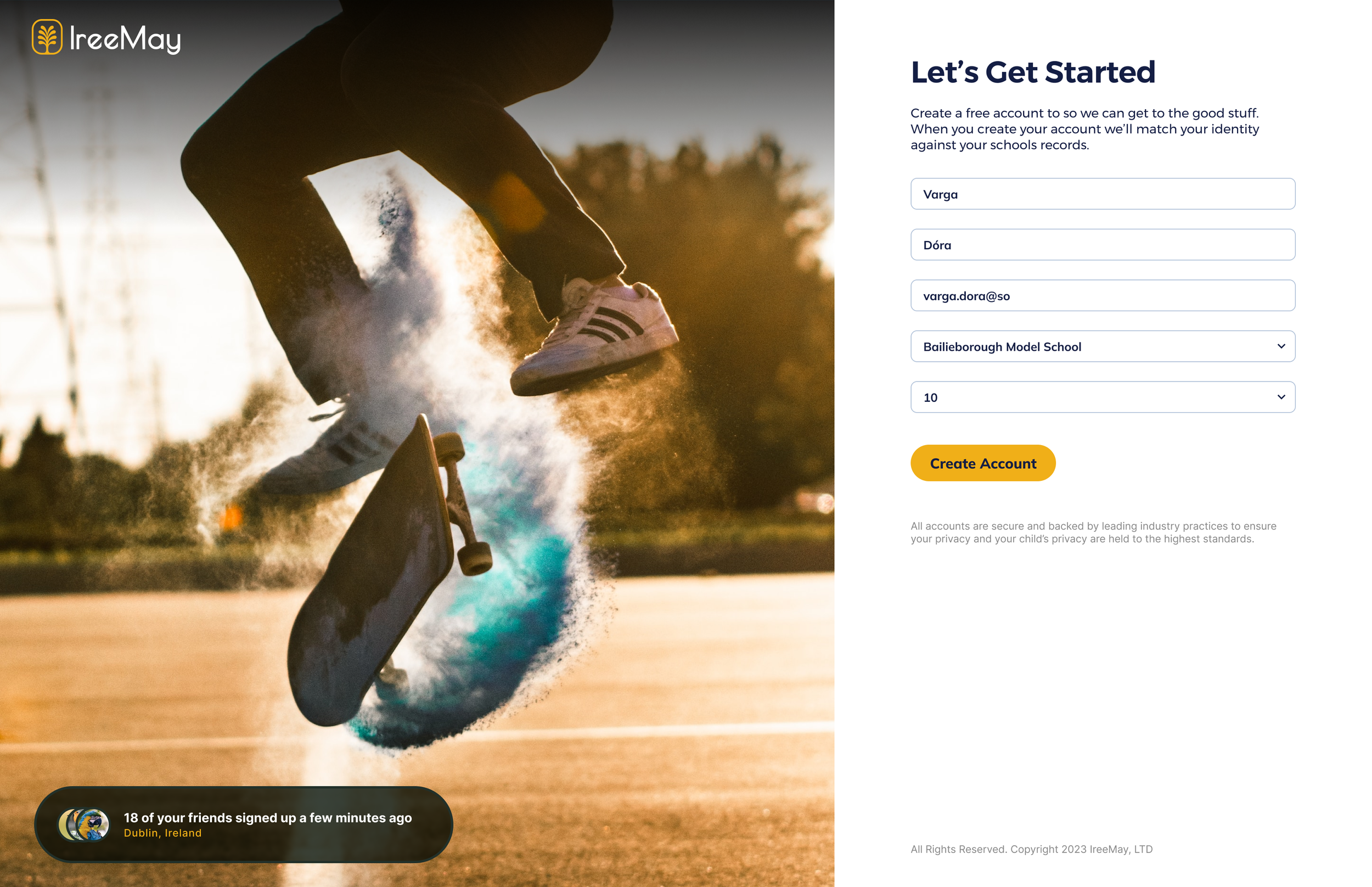
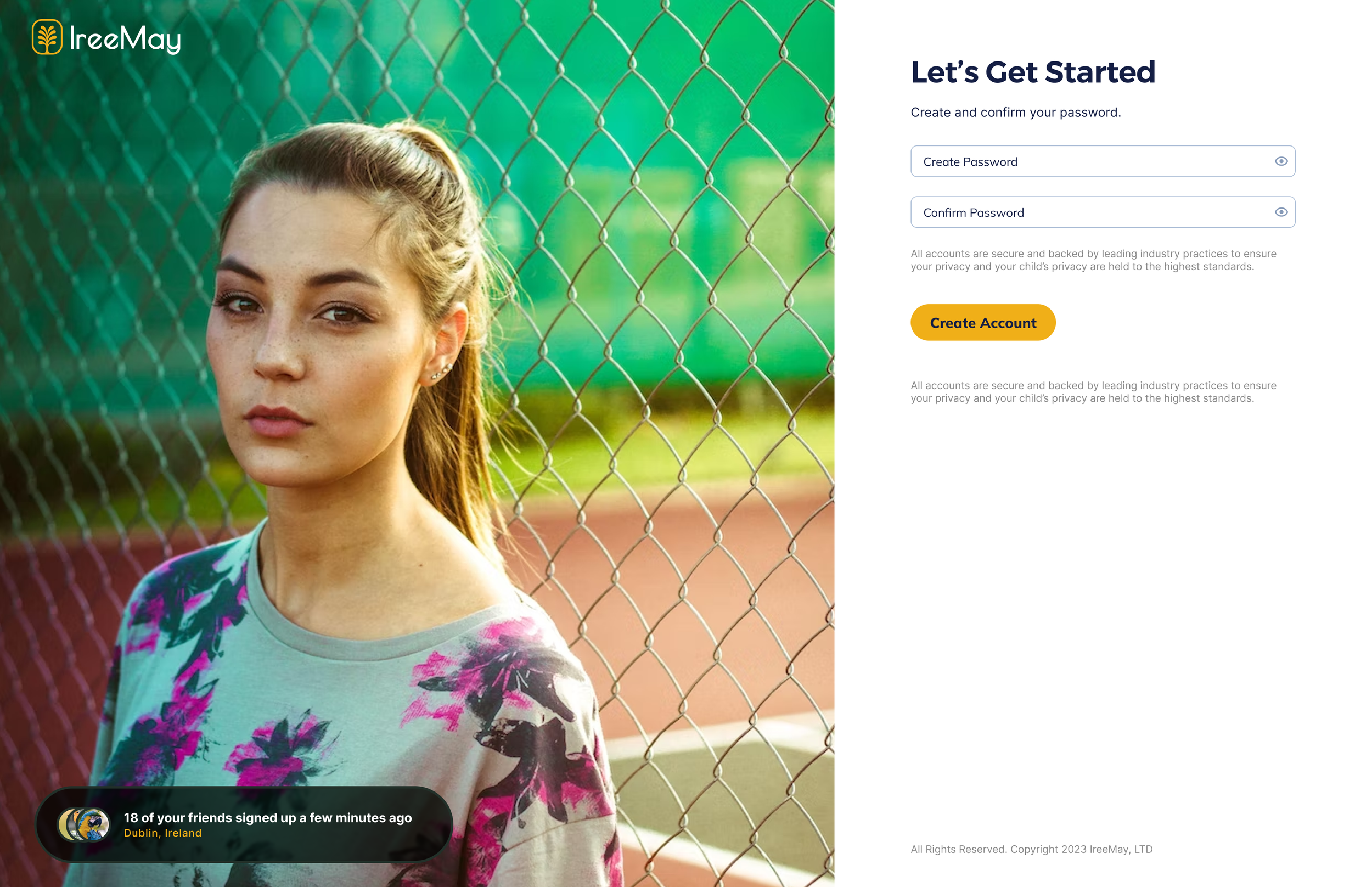
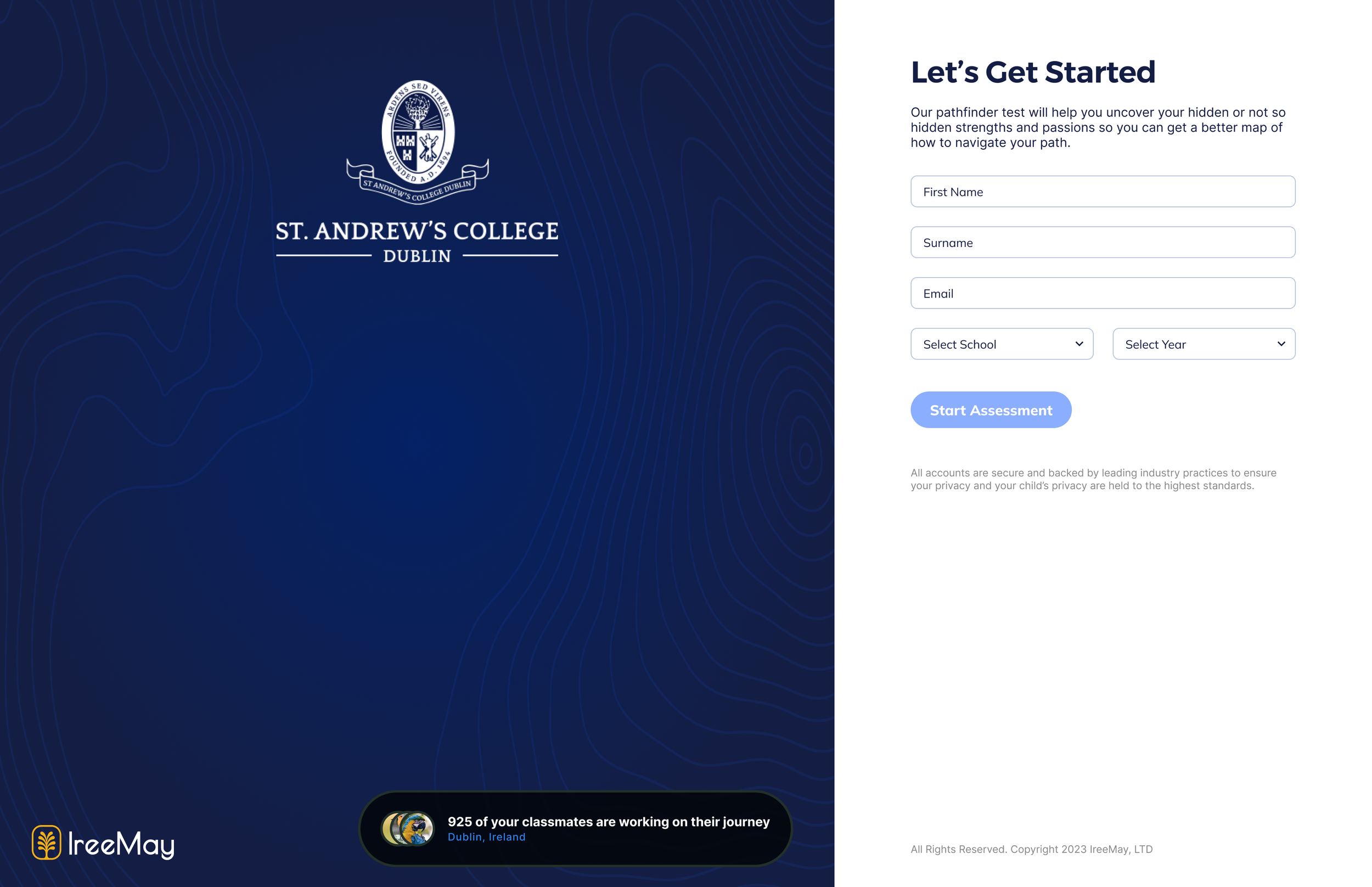
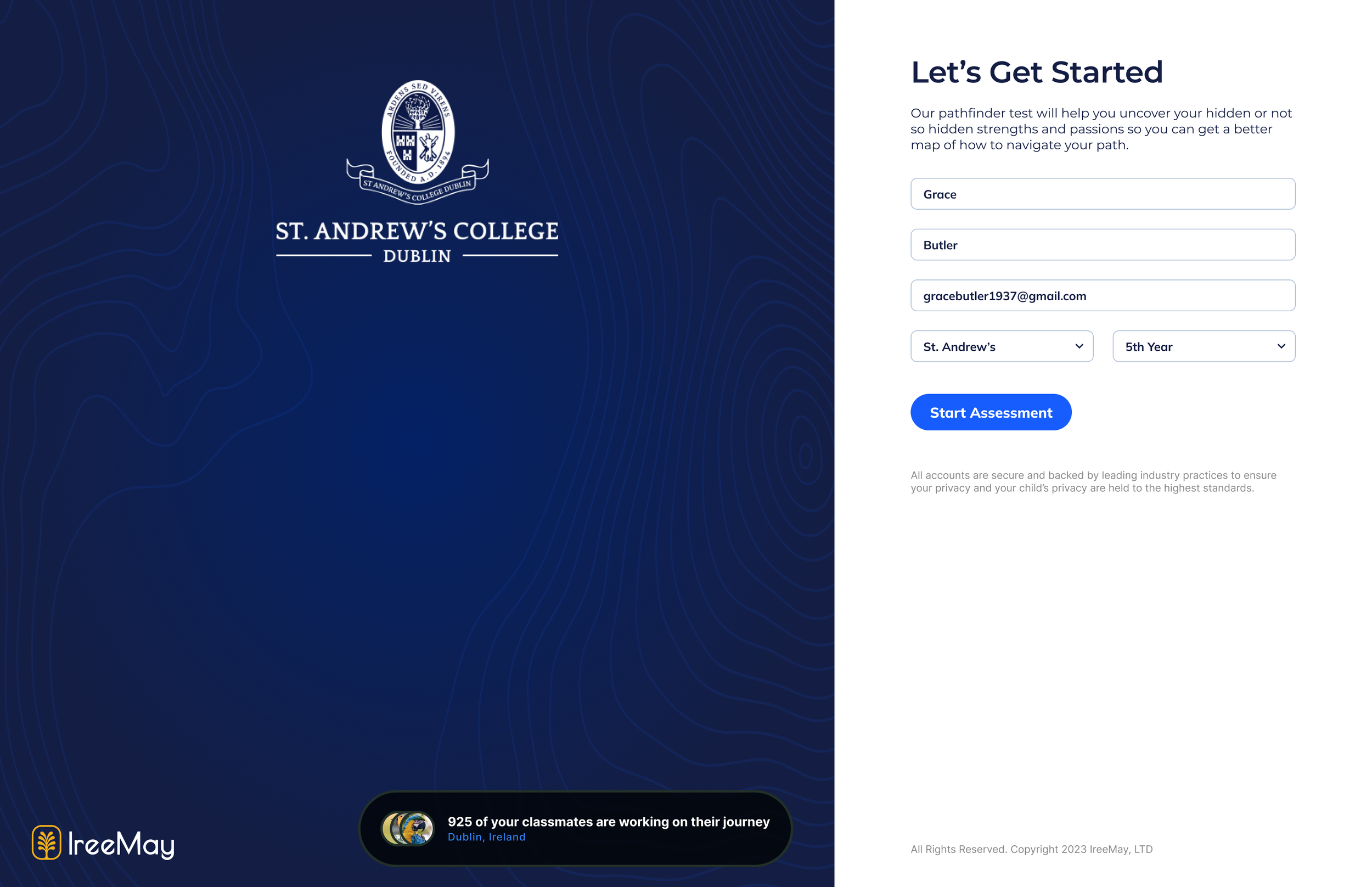
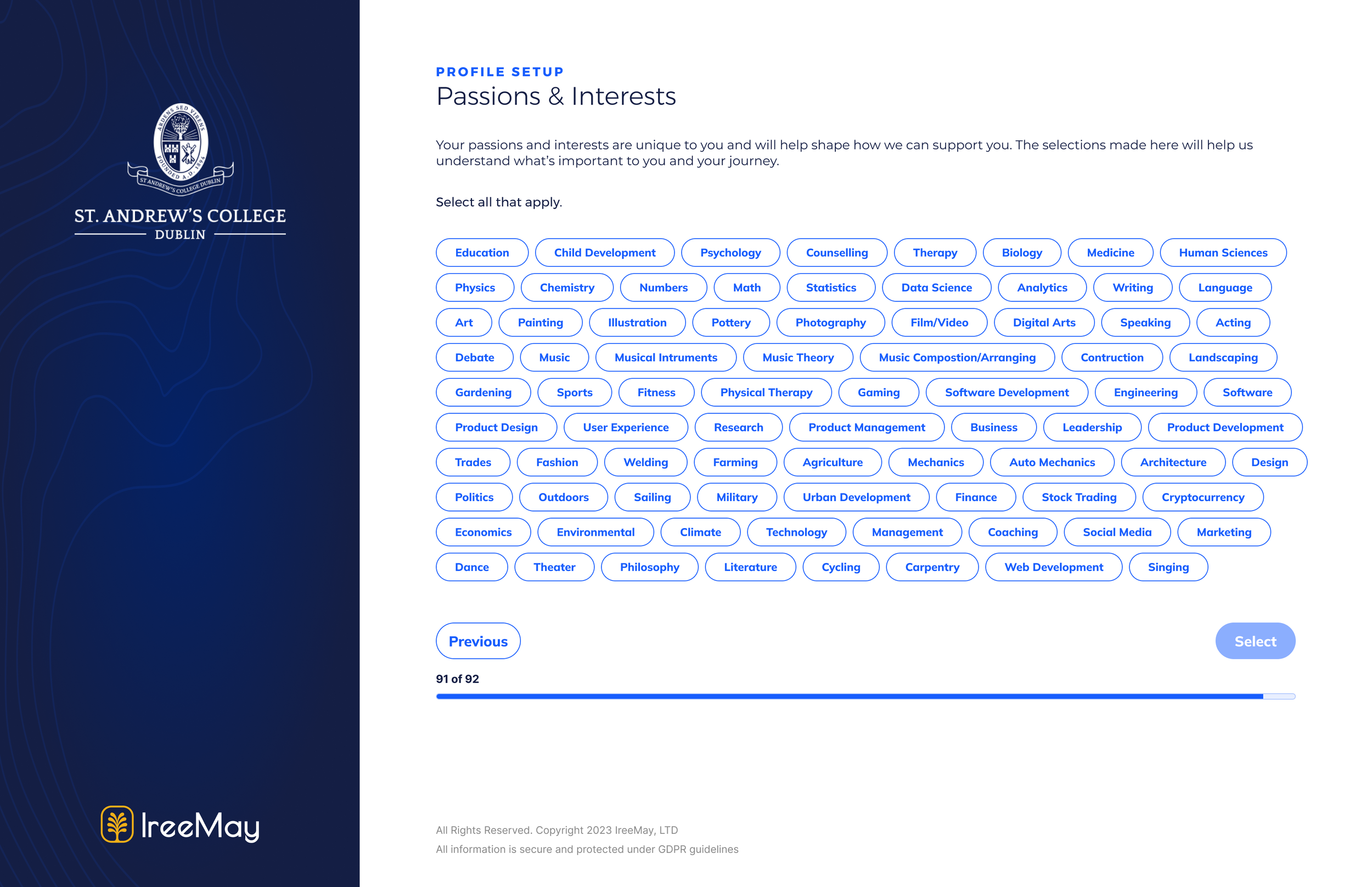
The onboarding flow was designed with one priority: minimize the distance between landing and starting the assessment. Every additional step was a drop-off risk — and unlike a consumer app where a user might return later, a student who didn't complete their assessment in the first session was unlikely to come back. The account creation flow was compressed to the essentials, with role-specific branching that immediately signaled to each user type that the platform understood their context.
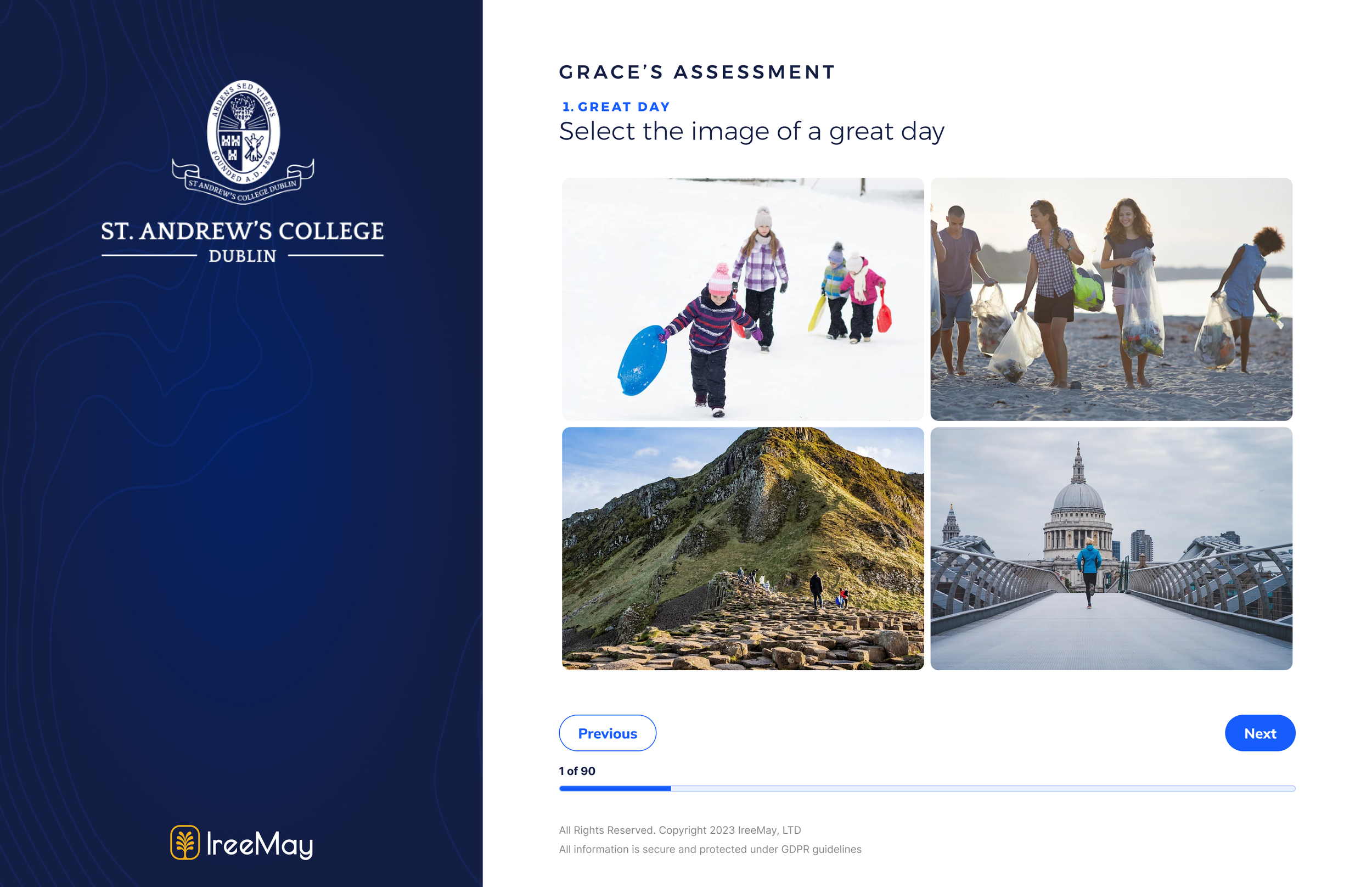
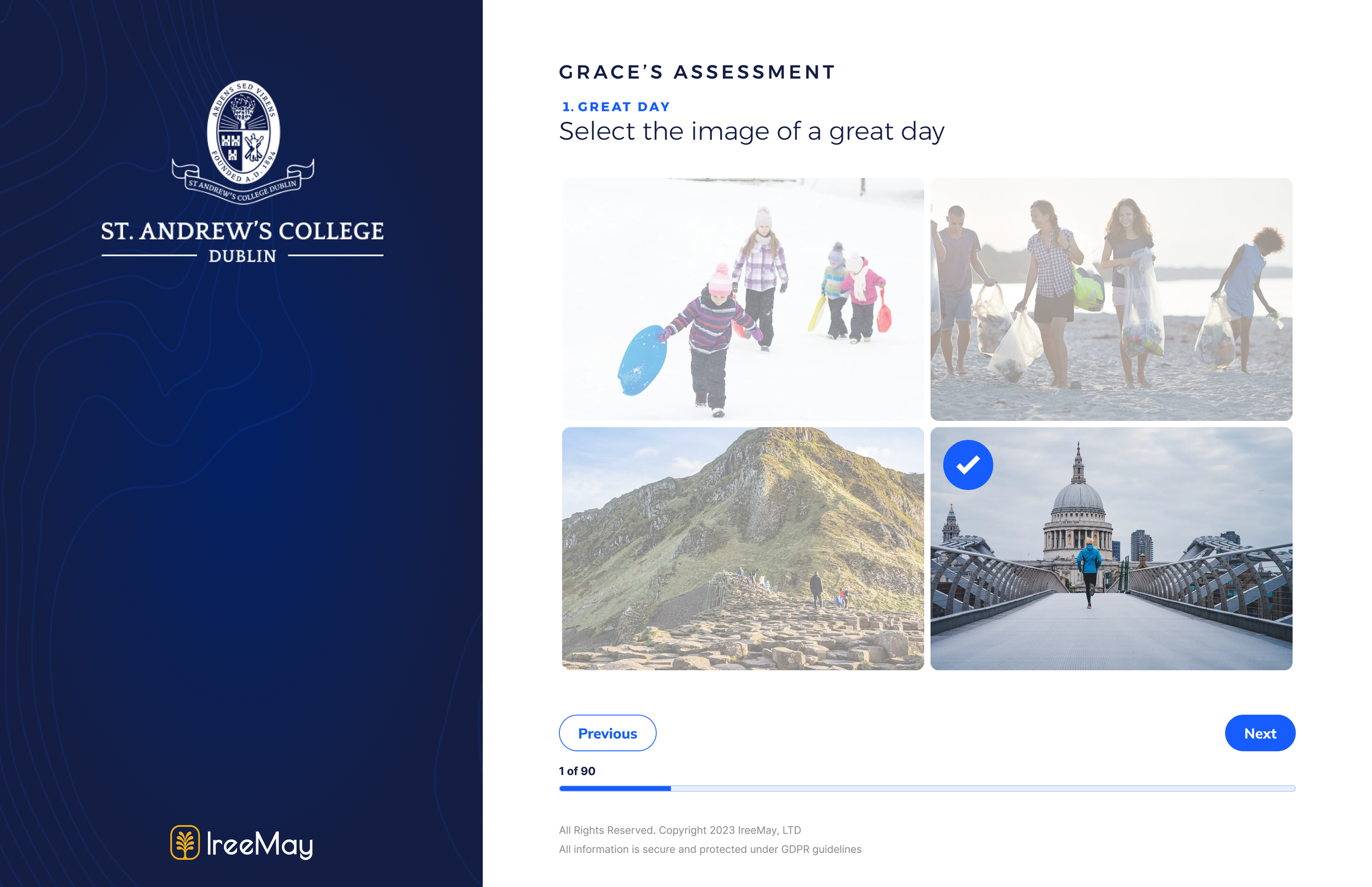
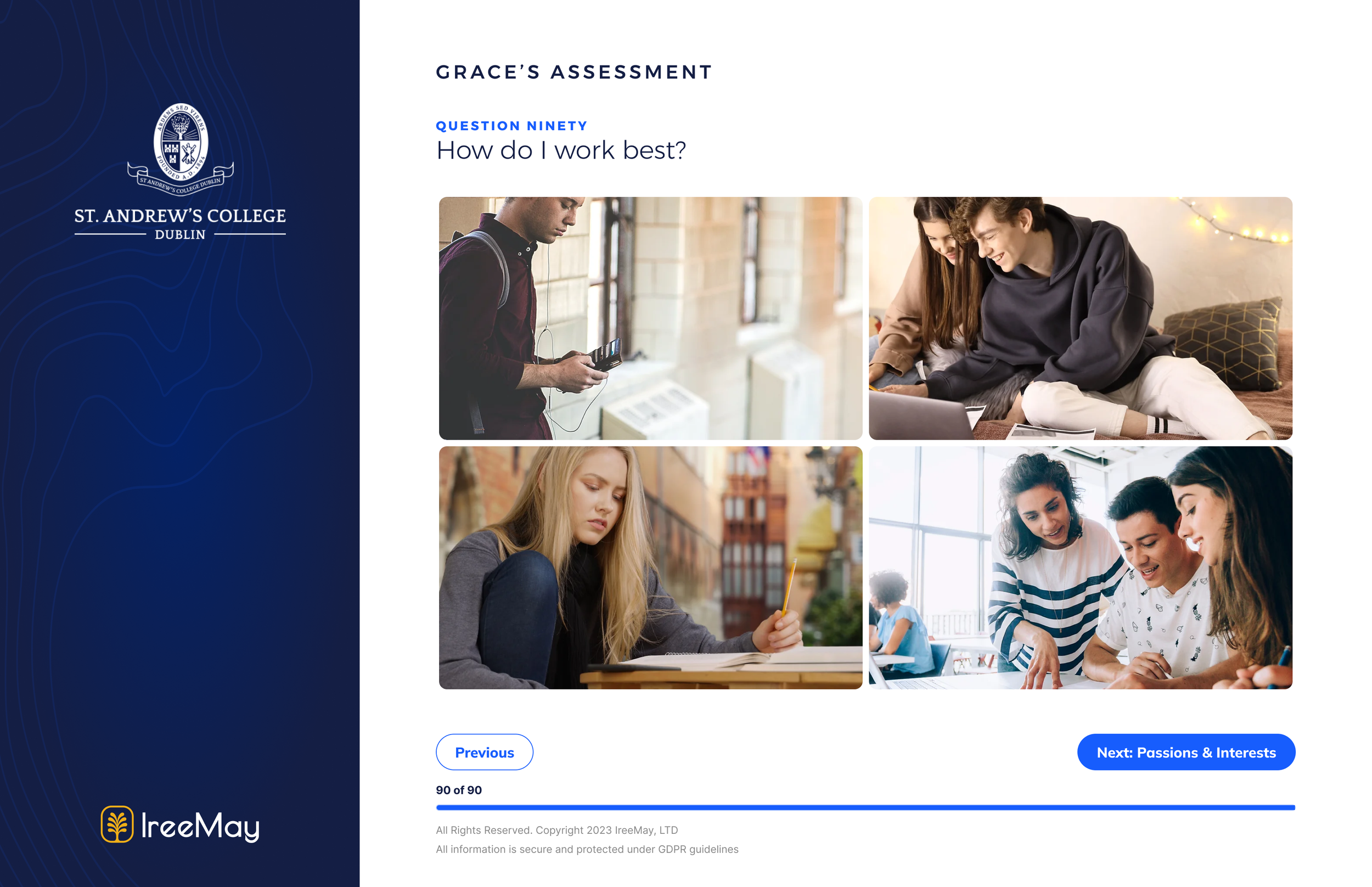
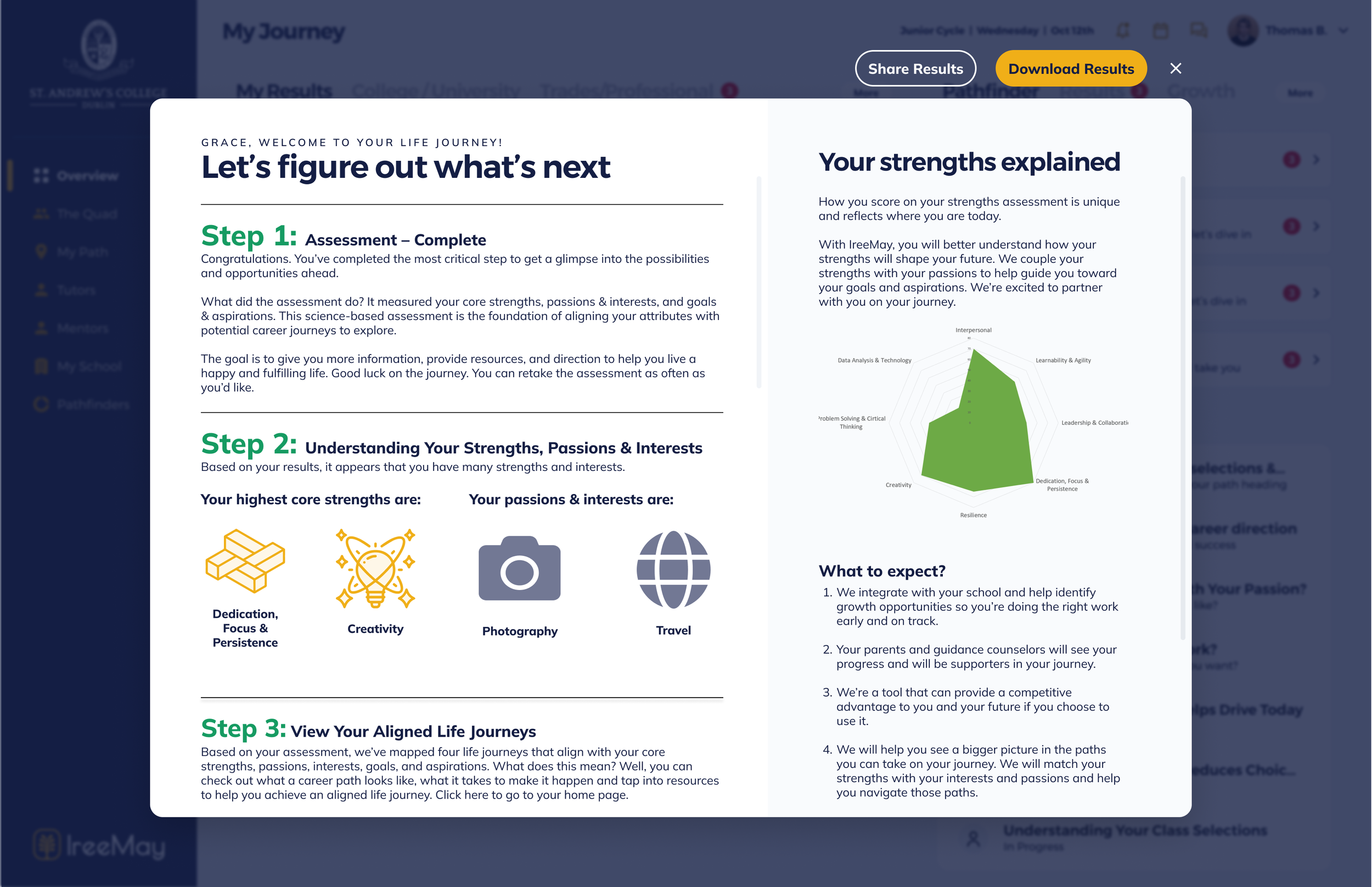
The assessment was the core of the product — and the hardest design problem. Psychometric assessments are typically clinical, intimidating, and produce outputs that require professional interpretation. IreeMay needed an assessment that felt like self-discovery, not an exam, and produced an output — a personalized pathway — that was immediately actionable by a student without requiring a counselor to translate the results.
The visual design of the assessment screens was deliberately low-stakes and conversational. Question by question, with progress clearly indicated, the assessment built toward a results page that surfaced the student's alignment across career categories — University, Trades & Professional, and specific career clusters — in a language that made sense to them, not to a career advisor.
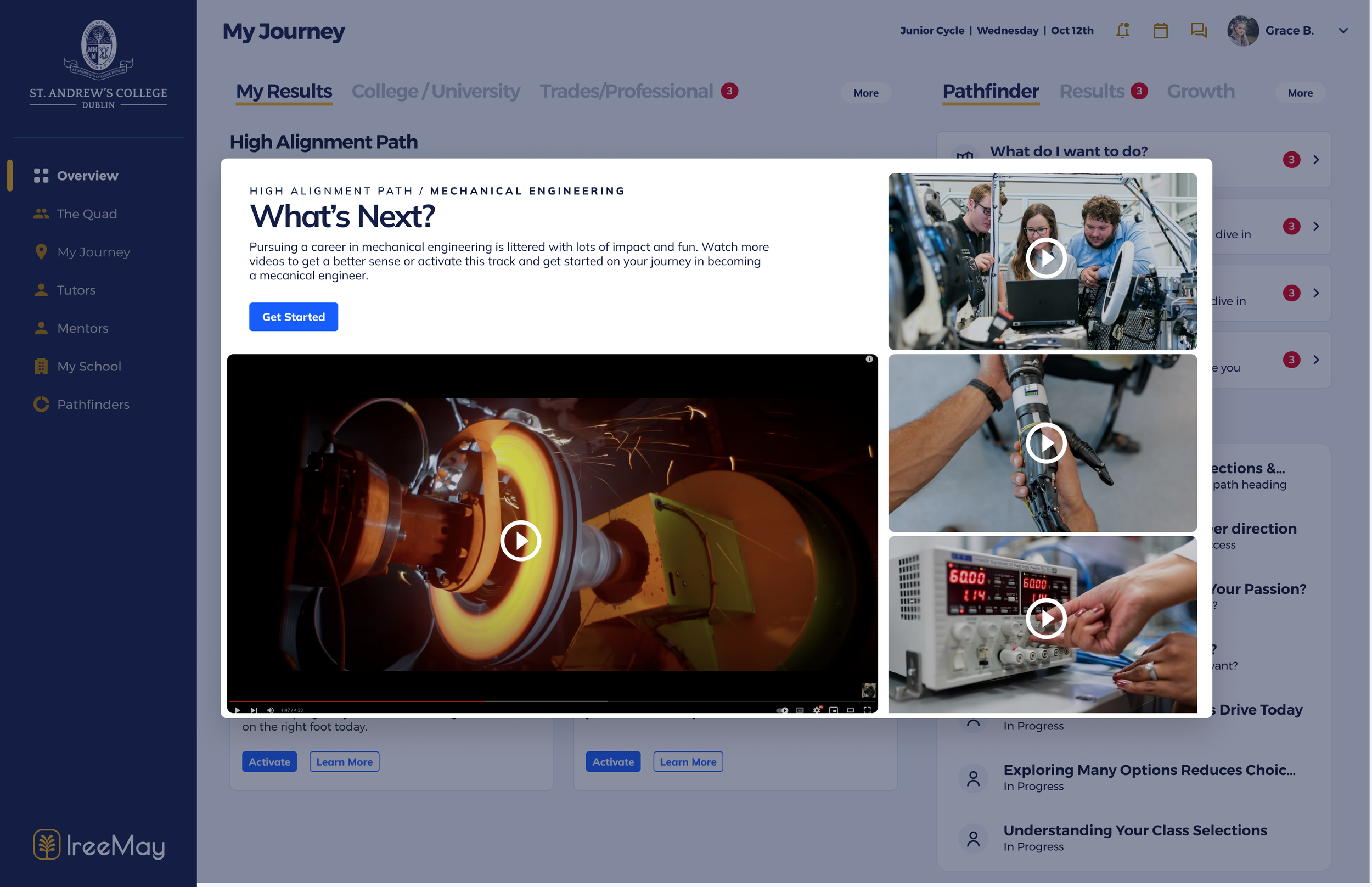
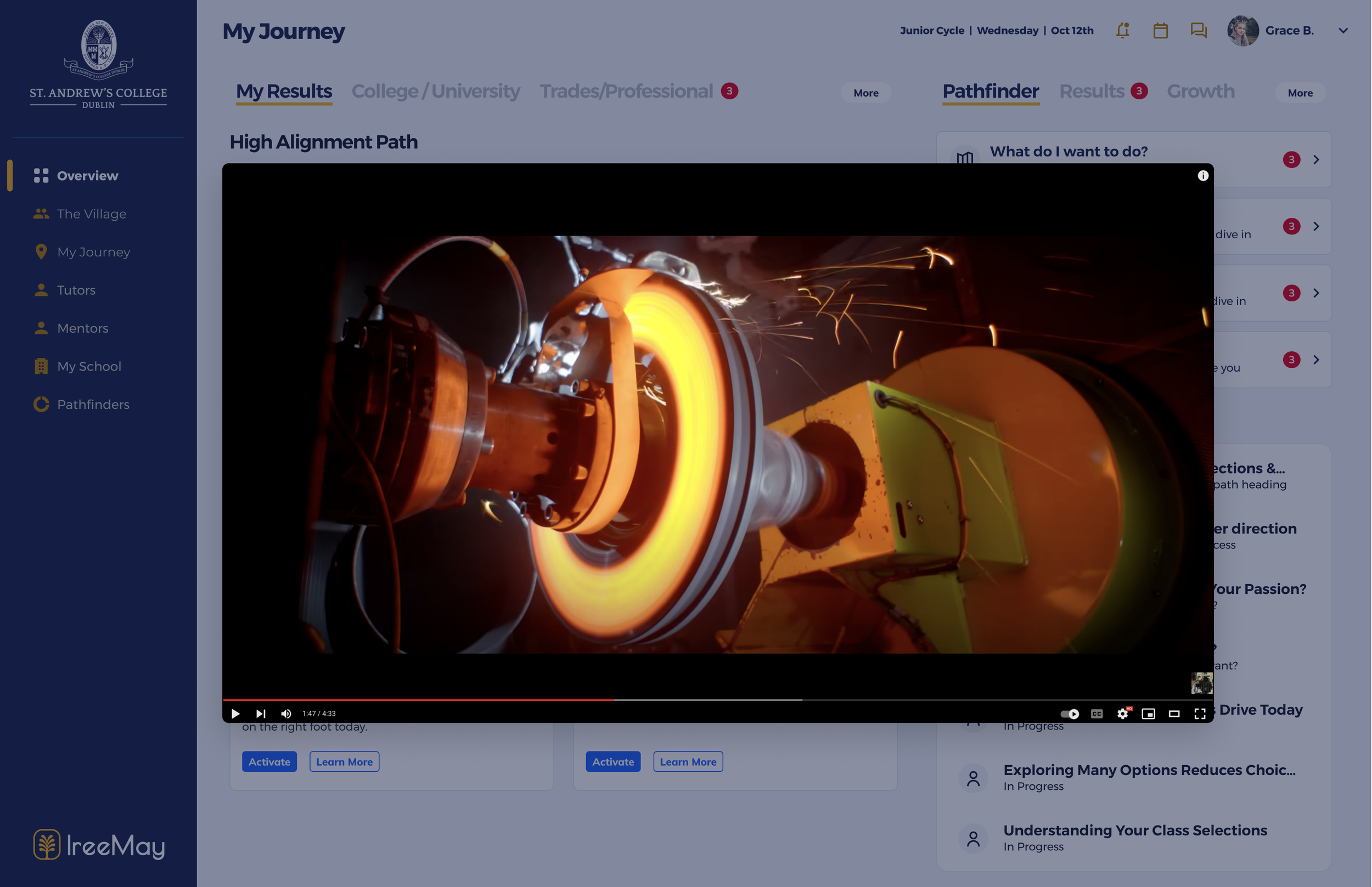
The results experience was the product's most important moment — the payoff for completing the assessment and the artifact that drove conversations between students, parents, and counselors. Results were framed as alignment journeys rather than scores, surfacing concrete career categories and educational pathways without narrowing the student's possibilities or producing the anxiety a ranked output would.
The counselor dashboard inverted the student experience: instead of a single student's journey, it showed an entire year group at a glance — assessment completion, pathway results, and action flags for students who needed targeted support. This was the view that justified institutional adoption and made the case for match funding.
IreeMay was a freelance engagement built alongside a group of Irish co-founders — designers, educators, and technologists — working together to bring the platform to life. My role as Lead Product Designer meant owning the full design direction: setting visual language, architecting the three-segment user experience, and producing the high-fidelity designs that were used directly in the funding conversations with the Irish secondary school system. This is the kind of engagement that 20+ years of freelance leadership makes possible — coming in as a true partner, not a vendor, and producing work with genuine strategic stakes.
IreeMay is the clearest example in the portfolio of design work functioning as a fundraising instrument — not as collateral, but as the primary evidence of product viability. The platform didn't secure €1.93M because of a compelling pitch deck. It secured funding because the design demonstrated, concretely, that the product could work in a real Irish school for a real guidance counselor managing real students.